How Much Does It Cost to Clean a Well in Arizona?
A well service company’s 2026 cost guide lists well cleaning at $500 to $1,500. A well equipment maker’s 2026 guide puts well rehabilitation at $1,000 to $8,000. These are market numbers, not our price list.
The spread looks wide because the guides price different jobs. This post is about cleaning out an existing home, ranch or stock well. The University of Arizona Cooperative Extension says a domestic well slowly fills in with sediment after years of pumping. That fill can cut what the well is able to sustain.
What are the published well cleaning cost ranges?
Two published sources give numbers for a private well. Each line prices different work, so read the third column first.
| Source | Year | What the number covers | Range |
|---|---|---|---|
| Well service company’s cost guide | Updated February 2026 | Well cleaning and development | $500 to $1,500 |
| Well service company’s cost guide | Updated February 2026 | Chemical treatment | $500 to $1,500 |
| Well service company’s cost guide | Updated February 2026 | Shock chlorination | $200 to $500 |
| Well service company’s cost guide | Updated February 2026 | Hydrofracturing | $2,000 to $5,000 |
| Well equipment maker’s guide | 2026 | Simple chemical treatment or surging | $1,000 to $3,000 |
| Well equipment maker’s guide | 2026 | Hydrofracturing or more extensive work | $3,000 to $8,000 |
| Well equipment maker’s guide | 2026 | Well rehabilitation overall | $1,000 to $8,000 |
Neither guide prices Arizona wells on its own, and we found no published range for Arizona alone.
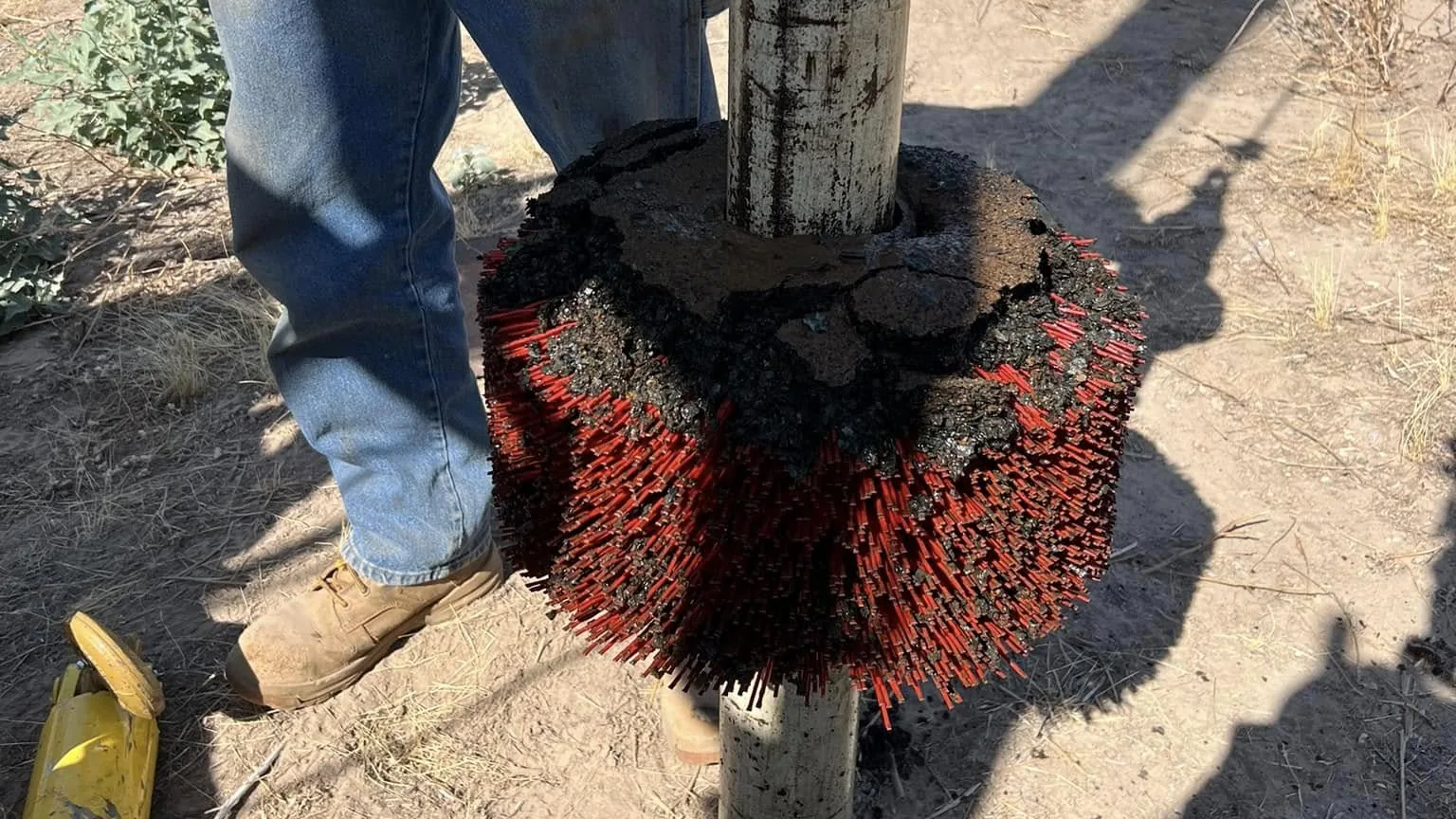
On our side, this work is called well cleaning and rehabilitation. The pump comes out, the sediment gets bailed and the casing gets brushed. Then the well is treated and test pumped.
Why do well cleaning cost ranges differ so much?
Each range counts a different job. A plain cleaning line may cover one step, while a well rehabilitation cost figure may cover the whole thing.
A surge and clean. Surging or jetting removes sediment and debris. The equipment maker’s 2026 guide prices simple surging or chemical treatment at $1,000 to $3,000. The University of Arizona Cooperative Extension recommends surging and scrubbing any time pump work opens up the well.
Chemical treatment. Chemicals or acid dissolve mineral scale and biofilm. The well service company’s 2026 guide lists chemical treatment at $500 to $1,500 and shock chlorination at $200 to $500. The Extension bulletin says removing the pump and scrubbing the well piping best clears bio-slime. So a chlorine-only price covers one step of the job.
Hydrofracturing. The same bulletin describes raising the water pressure in a bedrock well to fracture the rock. The two 2026 guides list this work at $2,000 to $5,000 and at $3,000 to $8,000. It goes after the rock around the well, so it is a separate job from cleaning out fill.
None of these lines says whether pulling and resetting the pump is in the number. Ask that first when you compare prices.
What are you paying for in a well cleaning?
A cleaning is a chain of steps, and each step is a line on the job. The table lists them without prices. Not every well needs every line.
| Line item | What the work involves | What moves the cost |
|---|---|---|
| Pulling the pump | Our pump hoist rig brings up the pump, drop pipe and wire, then sets them back | How deep the pump sits |
| Bailing sediment | A sand bailer on the rig lifts fill off the bottom of the well | How many feet of fill |
| Brushing the casing | A brush scrubs scale and rust off the casing | How much casing needs it |
| Treating the well | Treatment follows the scrubbing, and chlorination can be one step of it | How much water stands in the well |
| Test pumping | Pumping the well afterward to see what it produces | How long the test runs |
| Downhole camera look | A camera shows what is in the hole, when we need to see it | Whether the well calls for it |
Both 2026 guides put a camera look at $300 to $600. The University of Arizona Cooperative Extension describes the same core of the job. A pump rig goes over the well and the pump comes out. Then the well gets scrubbed with equipment like a large bottlebrush.
How does the same work scale on a public supply well?
Public supply wells are a different job. California public bids from 2017 to 2026 put a municipal well rehabilitation at roughly $110,000 to $150,000. That is not a home well number.
The split of the money is the useful part. In one itemized municipal estimate from 2026, labor and pumping were about 77 percent of the job. Chemicals were about 10 percent. In that estimate, most of the cost was rig time and pumping, not chemicals.
What moves the total around Globe?
Well depth. We work wells from under 100 feet along Tonto Creek to more than 700 feet deep in the high country. Every foot of drop pipe and wire comes up before the bailer goes down. The well service company’s guide calls depth the biggest factor on any repair that needs the pump pulled.
How much fill. More fill means more trips with the sand bailer. In many wells, that work brings back several feet of lost depth. Catching trouble early can keep the job smaller, and that is what well maintenance is for.
Road and distance. We are based in Globe and work about 75 miles out. A stock well down a long dirt road takes more of the day than a house well near the pavement.
What gets replaced while the pump is out. With the pump up, you can see the pipe, the wire and the pump itself. Replacing worn parts adds to the bill, and it can save a second pull later. Our well pump replacement cost post has market numbers for those parts.
When is well cleaning the wrong spend?
Cleaning fits a sound well that has filled in or scaled up. Three cases call for a different answer.
Corroded casing. A well equipment maker’s 2026 guide lists cracked, corroded or collapsed casing as a reason to look past rehabilitation. When steel casing has corroded through, a liner is sometimes the answer. We tell you whether your well is a candidate.
A dropped water table. The University of Arizona Cooperative Extension says sustained yield declines when the water table drops after a well is built. Cleaning the hole does not bring that water back.
A well that needs deepening or replacing. That work calls for a licensed well driller. Talk to one before you pay to clean a well in that shape.
A downhole camera look can help tell these cases apart. We use one when we need to see what is in the hole.
How do we price a well cleaning around Globe?
These ranges describe the market, and your well may land inside or outside them. Tell us how deep the well is, if you know, and what the water has been doing. We work Gila County and the country around it, about 75 miles out from Globe.
You get the scope of work and a quote before work begins. Call or text (928) 961-6641, or start with how we clean out a well.