How Much Does a Windmill Cost in Arizona?
A 2026 national cost guide puts a water-pumping windmill at $4,000 to $20,000 with installation. Another cost guide, last updated in 2023, lists windmill water pumps at $4,200 to $19,600. These are market numbers from published guides, not our price list.
This post is about the ranch windmill that pumps water from a well, not an electric wind turbine. University of Wyoming Extension calls the mechanical windmill the first, and still common, option for pumping groundwater in distant pastures. Where your job lands in that range depends on what the well asks of the mill.
What do published guides say a windmill costs?
Three published figures frame the question. Each one covers something a little different, so read the middle column.
| Source | Year | What the number covers | Range |
|---|---|---|---|
| National cost guide | 2026 | Windmill water pump, with installation | $4,000 to $20,000 |
| National cost guide | Updated 2023 | Windmill water pump | $4,200 to $19,600 |
| USDA-funded publication | 2012 | New mill only, before the tower and installation | $2,000 to $13,000 |
The 2012 line needs a second look. That USDA-funded publication priced a new Aermotor mill at $2,000 to $13,000. It left out the tower and the installation, so a finished job cost more even then.
Do you already have a mill standing on the well? Then the question is usually windmill repair, not a new windmill. Replacing worn leathers or a parted sucker rod is a much smaller job than buying a new mill.
What makes up the price of a water-pumping windmill?
A windmill is several parts priced together, and each one moves the total.
The mill head. This is the wheel and the gear head on top of the tower. The wheel size sets how deep the mill can lift from. A 2006 government livestock watering factsheet says to choose the cylinder size for volume and the wheel size for lift.
The tower. The same factsheet says plainly that towers are costly. It gives towers a range of 22 to 40 feet. The wheel should clear anything within 350 feet by at least 30 feet. Nearby trees and buildings push the tower taller.
The pump cylinder, sucker rod and drop pipe. These parts hang down the well, so depth drives this line of the bill. We work wells from under 100 feet deep along Tonto Creek to more than 700 feet in the high country. A deeper setting means more feet of rod and pipe. The factsheet says it is usually best to pick the largest wheel and smallest cylinder that fill the need.
Setting it up on the well. The tower gets anchored and the mill goes up top. Then the cylinder, rod and pipe go down the hole. The 2012 range above left this work out. The drive to the well counts too, and some ranch roads are long.
A mill rarely works alone. It fills a storage tank or a trough, with a float valve and a pipeline in between. That side of the job belongs to our livestock water systems work.
Why do the well’s depth and the wind decide the size?
A windmill pumps only while the wind blows. One maker’s pumping tables assume a 15 to 20 mph wind, with the mill set on its long stroke. The same page says the short stroke adds one-third more lift and cuts the water pumped by one-fourth.
Depth and volume pull against each other. A bigger wheel lifts from deeper, and a bigger cylinder moves more water. A deep well under a big herd needs both, and that is where prices climb.
Wind decides the rest. A 2012 USDA-funded publication drew a line at average wind above 7 miles per hour. Above it, a wind pump may produce water at a lower cost than solar. Below it, a mill can sit still for days while the tank drops.
What does windmill repair cost?
The cost guides above price new windmills, not repairs. A repair total depends on what failed and how much rod and pipe has to come out. These are the usual line items, without prices.
| Repair item | What the work involves | What moves the cost |
|---|---|---|
| Yearly gearbox oil | Changing the oil in the mill head, plus a bolt check | Tower height and the drive out |
| Leathers and check valves | Pulling the sucker rod, and often the drop pipe, to reach the cylinder | How deep the cylinder sits |
| Sucker rod and drop pipe | Pulling, replacing worn or parted lengths, and resetting them | How many feet come out |
| Cylinder rebuild | Rebuilding the sucker rod assembly with a new cylinder | Cylinder size and depth |
| Fishing dropped rod or pipe | Retrieving lengths that fell down the well, using fishing tools | How far down they sit |
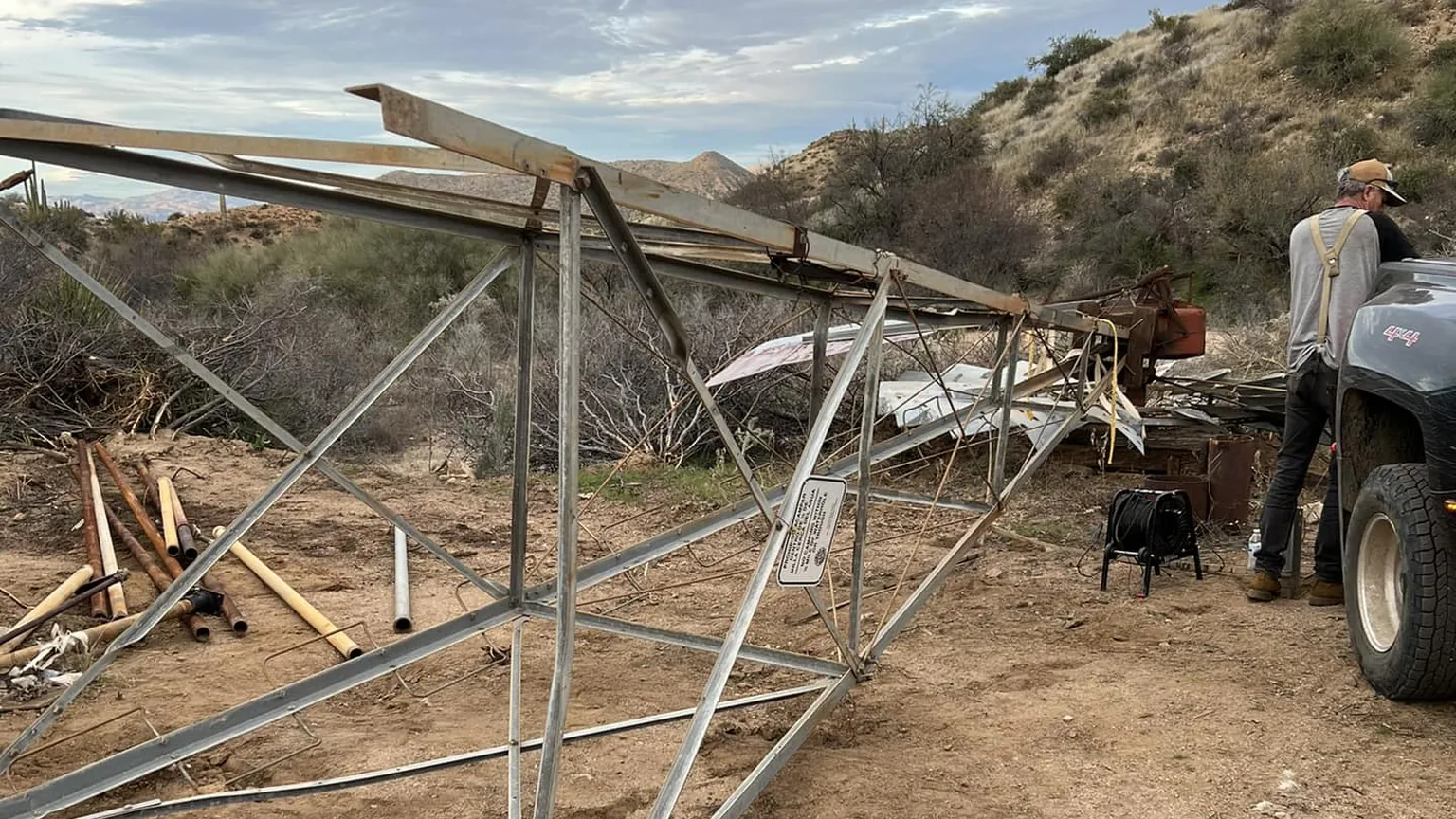
| Tower work | Climbing in a harness, or laying the mill down to repair it on the ground | Tower height and storm damage |
Two kinds of upkeep come up every year. The maker’s schedule calls for an oil change once a year under normal conditions. It also calls for a bolt check on the mill and tower. Do it at the oil change, or after a major storm.
Extension guidance points the same way. New Mexico State University Extension lists higher repair and maintenance costs for wind pumping. It notes that parts and special tools can be hard to find. High winds may also damage a windmill. The 2012 USDA-funded publication says to expect much higher maintenance with windmills than with solar.
When is a solar pump the other answer?
A deep well or a calm site can tip the math toward solar. So can a mill that needs a new head and a new tower at once. We convert windmill wells to a solar well pump when that fits better. Our guide to choosing a solar pump or windmill compares the two side by side.
How do you get a windmill priced around Globe?
The numbers on this page are national market figures, not a quote for your well. Your total turns on what the well asks of the mill and how far it sits down a ranch road.
We work on ranch windmills across Gila County and the country around it, about 75 miles out from Globe. That takes in Tonto Basin and the San Carlos country. We explain the scope of work and give you a quote before work begins. Call or text (928) 961-6641, or read what our windmill service covers first.